experience, expertise, authority, and trustworthiness (E-E-A-T) is crucial for YMYL content creators. This includes making sure the information is up-to-date, fact-checked, and sourced. Including credentials, expert reviewers, author biographies, and external references can further enhance the YMYL content.
When users see a YMYL website as trustworthy and credible, they are likely to visit it often, share the content with others, and become loyal customers or clients. Search engines also consider user trust signals, such as engagement metrics and positive reviews, when checking the quality of YMYL content.

YMYL and the Google Quality Raters’ Guidelines
Google’s Quality Raters’ Guidelines help assess the quality and relevance of web pages, especially YMYL content. These guidelines provide insights into how Google evaluates the E-E-A-T of sites, which helps optimizing YMYL pages well.
Insights into Google’s guidelines for YMYL pages
The Google Quality Raters’ Guidelines outline specific criteria for evaluating YMYL content. These guidelines help Google validate that its algorithm understands and ranks web pages appropriately. E-E-A-T is not a direct ranking factor but a framework Google uses to evaluate content quality. Some critical factors considered within the guidelines include:
- Experience: For YMYL topics such as finance or health, having experience could mean that the content creator has worked as a financial advisor, a healthcare professional, or has a background in a specific field. This experience provides credibility and expertise that can be valuable when creating YMYL content.
- Expertise: Google expects YMYL content to be created by individuals or organizations with a demonstrable level of expertise in the field. You can show this expertise through qualifications, experience, industry recognition, and contributions to reputable publications.
- Authoritativeness: Google gives weight to YMYL content from authoritative sources. This can include sites that have established credibility in the respective industry, are recognized by experts or organizations, or have a strong reputation for publishing accurate and reliable information.
- Trustworthiness: Trustworthiness is crucial for YMYL content. Google evaluates factors such as transparency, accuracy of information, and transparent disclosure of potential biases. Websites with a history of complaints, misinformation, or malicious intent are likely to be seen as less trustworthy.
- Content quality: Google expects high-quality YMYL content to provide comprehensive and insightful information. The guidelines emphasize the importance of avoiding shallow content. YMYL pages should satisfy user intent by addressing the main concerns and questions related to the topic.
How Quality Raters assess E-E-A-T
Google’s quality raters check various factors to determine content creators’ or website owners’ experience, expertise, authoritativeness, and trustworthiness. While the exact details of the process are unknown, quality raters evaluate various elements when checking the experience of individuals or organizations. These aspects help determine the level of expertise and authority.
Here are some factors they look at:
- Qualifications and credentials: Quality raters examine the qualifications and credentials of content creators, such as formal education, certifications, and professional qualifications directly related to the topic. These indicators demonstrate a commitment to learning, acquiring knowledge, and advancing within the field, adding credibility to their expertise.
- Professional experience: The practical experience of content creators or website owners within the industry is an important aspect evaluated by quality raters. This may include previous work experience, industry involvement, or practical expertise gained through specific projects or research. Raters assess the depth of experience to determine the level of knowledge.
- Demonstrated knowledge and authority: Raters assess content to determine the creators’ depth of knowledge and authority. This can be evaluated through comprehensive and detailed explanations, references to reputable sources, and the provision of unique insights or perspectives. The ability to offer valuable information and display up-to-date expertise in the field is crucial in establishing perceived authority.
- Industry recognition: Quality raters consider any industry recognition or acknowledgment received by content creators or website owners. This may include awards, honors, invitations to speak at conferences, or inclusion in expert lists or directories. Such recognition highlights expertise and authority within the industry, further solidifying credibility.
- User feedback and engagement: User feedback, reviews, and testimonials may also be considered by raters when evaluating experience. Positive feedback, active engagement with the audience, and a history of providing valuable and helpful information indicate experience that resonates with users and builds trust. These are important trust signals for YMYL content.
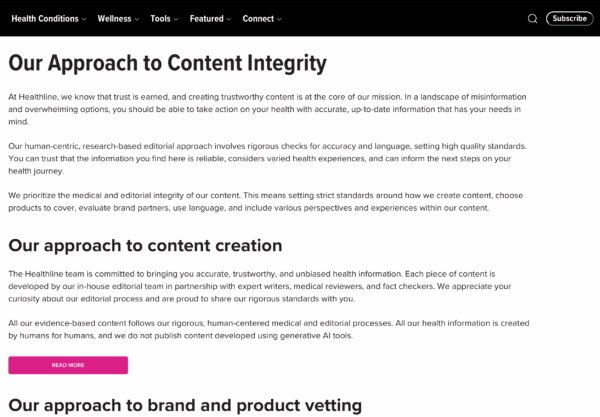
- Transparency: Publishers should disclose biases, funding sources and other important policies to align with Google’s emphasis on authenticity.
Refining algorithms
Quality raters provide feedback to Google, which uses this information to refine algorithms and improve search results. While quality raters do not directly influence rankings, their assessments are help Google understand if everything works as intended.
Yoast SEO, E-E-A-T, YMYL and site policies
Yoast SEO Premium helps you build your website’s E-E-A-T. As we’ve seen in this article, Google checks many factors to evaluate the quality of YMYL sites. To help Google understand your site, Yoast SEO Premium has multiple options to direct it to the proper sources. Publishing principles and site policies are central to this process, providing insights for Google. In Yoast SEO Premium, we can add these pages to your structured data.
Publishing principles and site policies guide content creation and distribution. They ensure your content is accurate, trustworthy, relevant, transparent, engaging, private, accessible, continuously improved, and legally compliant. Following these principles delivers high-quality content users can rely on.
Structured data and AI Overviews for YMYL content
Structured data helps Google better understand YMYL content, ensuring it is optimized for AI-generated summaries and passage-level clarity. With the rise of AI Overviews, YMYL sites must prioritize structured data to improve visibility in search results. This includes using schemas like publishingPrinciples to highlight policies and expertise, which helps Google assess credibility and relevance more effectively.
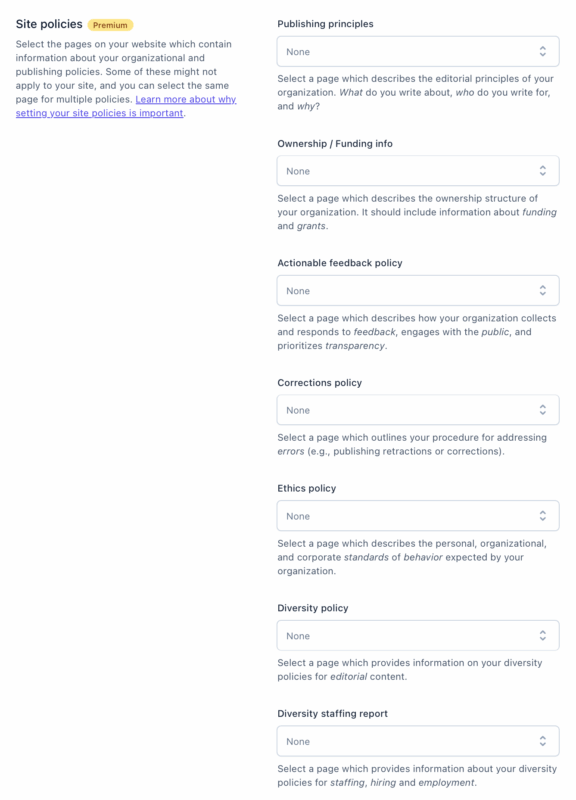
Yoast SEO Premium includes the publishingPrinciples schema to help you with this, making it your principles easily to find for search engines. Head to the Site basics settings in Yoast SEO and navigate to the Site policies section.
Here, you’ll find different options for publishing principles, such as general publishing principles, funding information, corrections policy, ethics policy, diversity policy, and more. Select the pages from the fields, and you’re all set. If you still need to set up these policies, now is a great time to start building them to improve your website’s credibility and SEO performance.
Conclusion
If you are looking to be succesful with a YMYL site, you need to work through several connected steps. When you align with Google’s guidelines, build E-E-A-T, and apply strong optimization methods, you can improve the performance of your YMYL site, gain audience trust, and stand out as a leader in your field.