When most marketers think about SEO, they jump straight to keywords like “best running shoes” or “how to do [whatever]”. Non-branded, high-intent, top-of-funnel stuff.
But our latest study might surprise you:
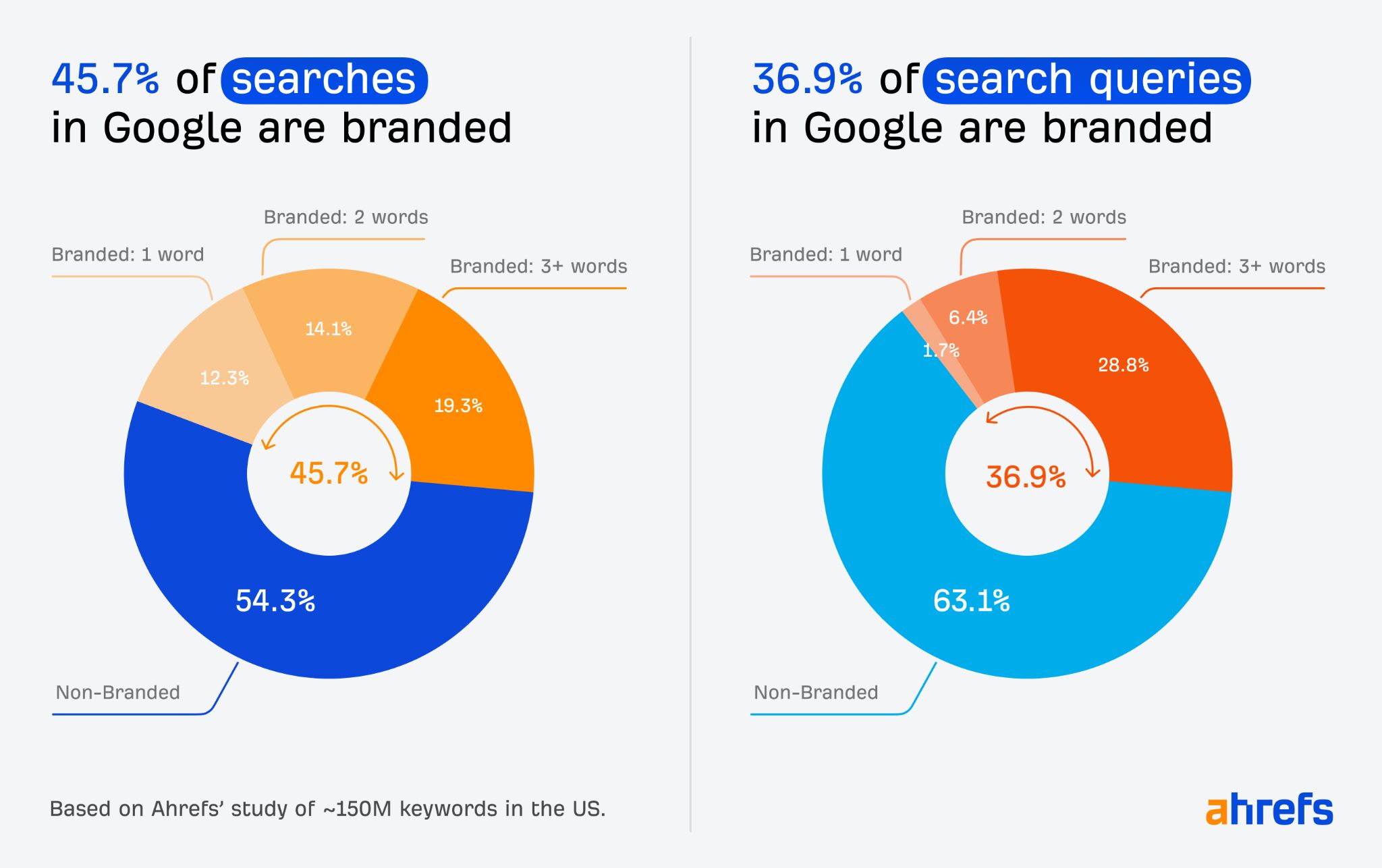
Nearly half of all Google searches (45.7%) are branded searches—meaning people are actively seeking out specific companies and products they already know.
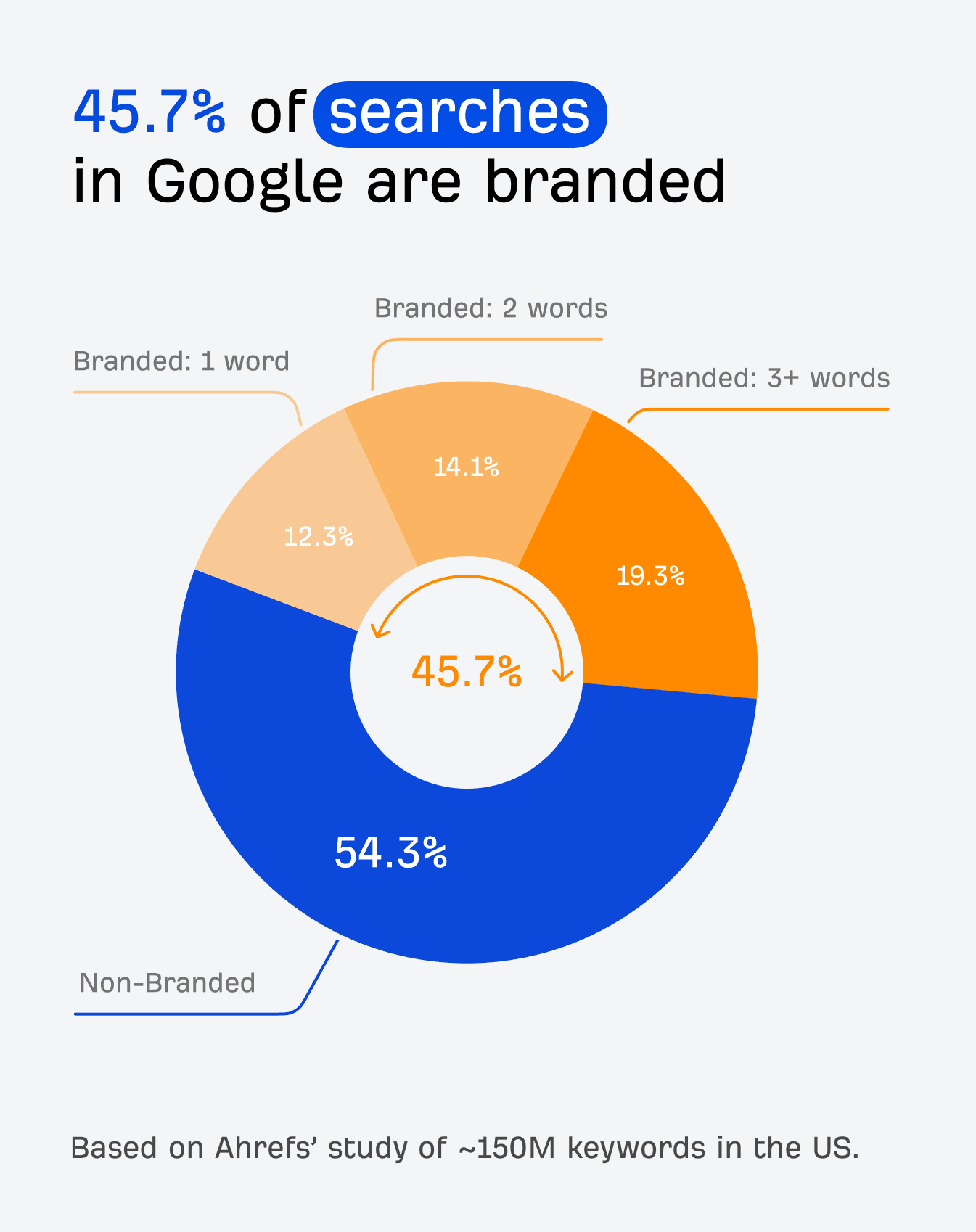
Yep, nearly half of what people type into Google includes a brand name or a product name.
It’s based on a massive Ahrefs study of ~150 million U.S. keywords. We’re talking hard data.
So, if you’re not actively considering brand marketing and branded search in your marketing strategy, you might be missing out on a huge piece of the pie.
(Shout out to Rand Fishkin for encouraging us to dig deeper on this.)
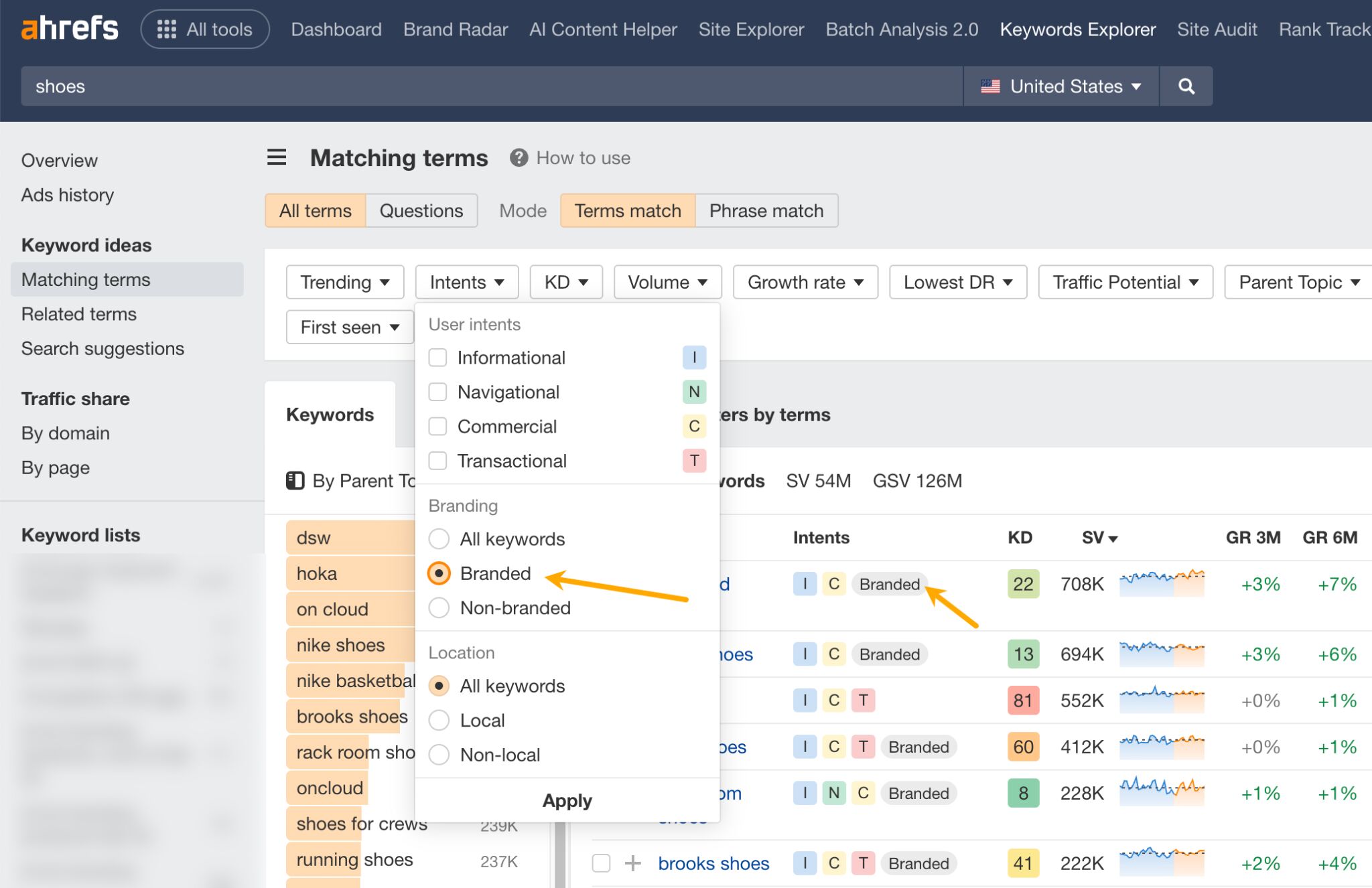
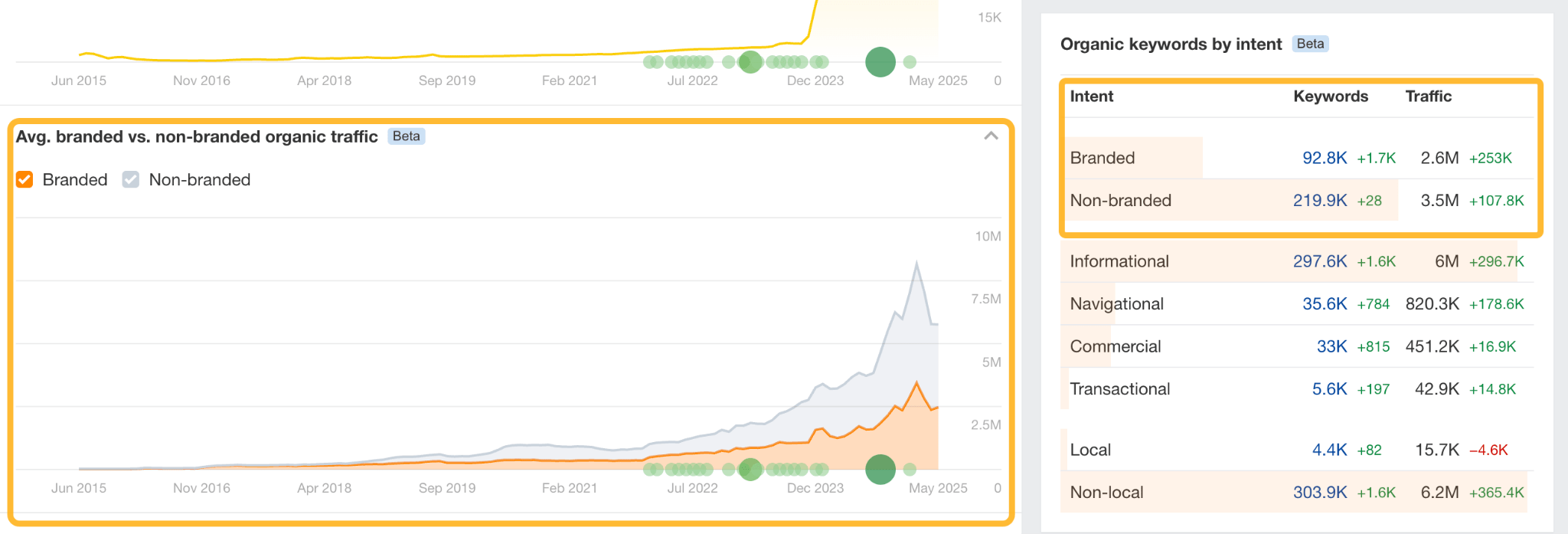
This also enables you to easily track branded vs. non-branded traffic performance in Site Explorer (Overview report).
3. You can (and should) optimize for branded search
The homepage isn’t the only result page searchers might be looking for. They could be looking for support pages, specific products, reviews, or local listings.
That’s why it’s worth auditing how your branded queries perform and making sure you control the full branded SERP with helpful, relevant content. Think of it as owning your reputation, not just your homepage.
Let me give you two examples from our turf.
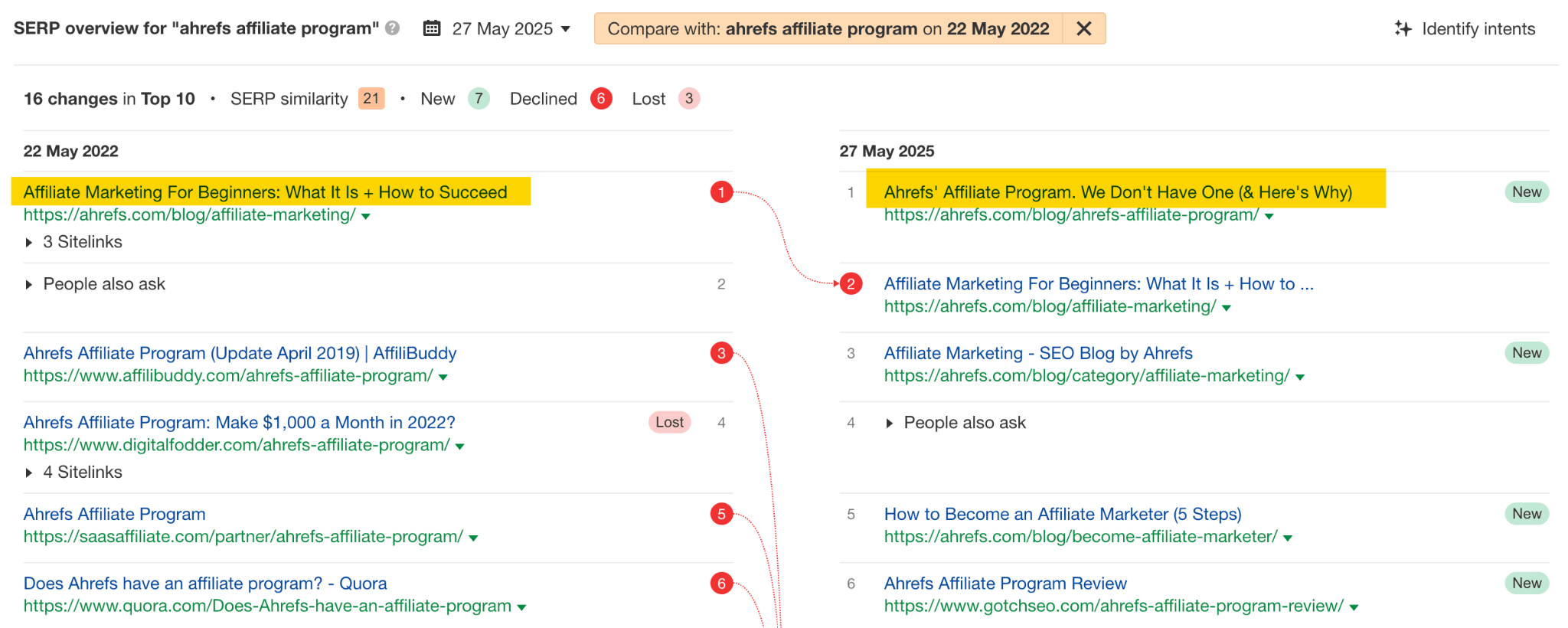
People were asking Google whether we had a program for affiliates, and since we didn’t have a page that answered that, Google tried “its best” pulling up a page that contained the words “ahrefs” and “affiliate”. Not the best experience, and this was our fault. We fixed that with a quick blog post.
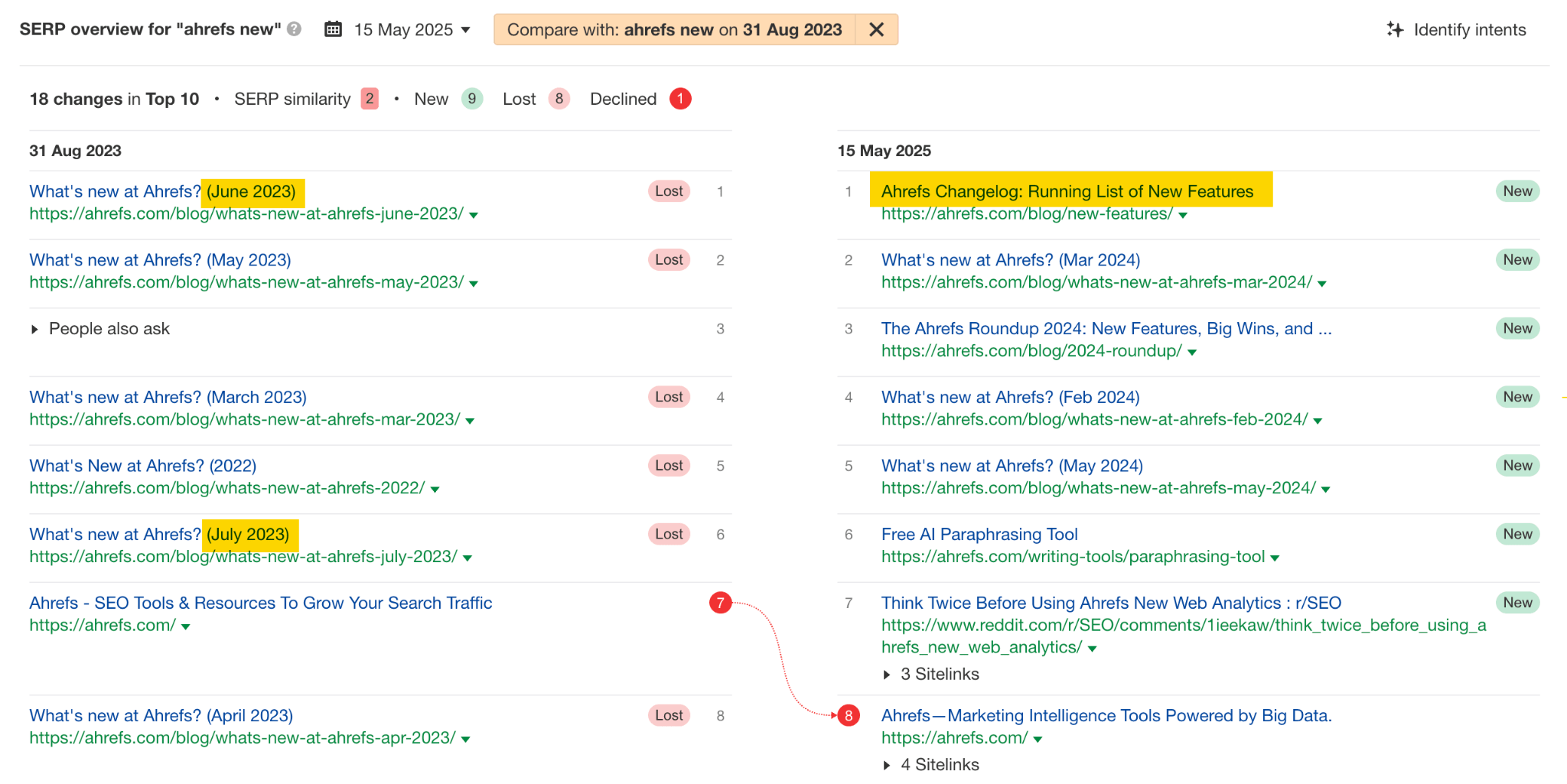
Another example. Some people like to see what’s new in Ahrefs by searching for something like “ahrefs new”. Before we introduced a changelog that consolidated all product updates, the SERP was chaos.
Similar Posts
What is an XML sitemap and why should you have one?
internal linking isn’t perfect. This post explains what they are and how they help you rank…
10+ Best Free Personal Portfolio WordPress Themes in 2026
Portfolio websites are a key part of any creative professional’s branding. They’re a place to showcase…
How to check your Ubuntu version (Using the command line and GUI)
Whether installing new software, following an online tutorial, or troubleshooting an issue, one of the first…
.com vs .ai: What Domain Name Is Best For You?
Are you currently facing the tough decision of choosing between a .com and a .ai domain?…
AI is being used in social services – but we must make sure it doesn’t traumatise clients
Late last year, ChatGPT was used by a Victorian child protection worker to draft documents. In…
Can music be good company? Research shows it makes our imagination more social
Earlier this year, we asked a group of older adults what music they listened to when…